
Seven Steps to Finding True Love
We want to be known completely and loved anyway. Every person on earth knows this longing. We want someone who will not leave when things get hard, who will not measure our worth by what we produce or how we look, who will stay. That kind of love feels rare because it is. But it exists. And it may not be where you have been looking.
Step 1 — Recognizing We All Long for a Love That Lasts
People have been searching for love since the beginning of time. We put a man on the moon, broke the speed of sound, and mapped the human genome, but love remains a mystery. Science cannot explain it. Mathematics cannot predict it. Poets still struggle to find words adequate enough to describe it.
The theologian Augustine wrote sixteen centuries ago: “Our heart is restless until it finds its rest in Thee.” He was writing about God, but he was also describing something every human being feels. That restlessness. That incompleteness. The quiet feeling that what we have is never quite enough.
We are all looking for true love.
What makes love so painful is that it slips away no matter how hard we hold on. It would be easier if love worked like a recipe, a list of ingredients, a logical set of steps to follow. But we all know the truth. Love cannot be manufactured. It cannot be bought or forced or controlled. It cannot be plotted on a map or reduced to a checklist.
And yet it is possible to find true love. Real, unconditional love. The kind that does not leave.
Step 2 — Understanding Why Human Love Always Falls Short
C.S. Lewis, one of the most widely read writers of the twentieth century, put the risk of love plainly: “To love at all is to be vulnerable. Love anything and your heart will be wrung and possibly broken. If you want to make sure of keeping it intact you must give it to no one.”
Lewis is right. What makes love so hard, and sometimes so painful, is the vulnerability that always accompanies it. When we choose to share our life with another person we make a choice to become vulnerable. And vulnerability, as most of us have learned the hard way, does not always end well.
We all know the feeling. Rejection. Humiliation. Opening our hearts to another person only to be turned away. It cuts deeper than anything else, shaking our sense of worth, our hopes, our identity. Love rushes us to the mountain top and when it is lost drops us back to the valley below.
Unconditional love is hard to find in another person because every one of us is too focused on ourselves. We live in a world that measures every relationship by what we get out of it. We stay committed only as long as it benefits us. We move on when something better comes along. We define love as “if you love me, you will do what I want” and then we wonder why it never lasts.
The Bible calls this sin, not just the wrong things we do, but the mistakes and regrets we carry, the ways we have turned away from God and gone our own direction, and the way we all naturally reach for ourselves first. Sin creates a real distance between us and the God who made us and loves us. It is part of why the world feels so broken. And it is part of why even the best human relationships fall short of the unconditional love our hearts are actually searching for.
You will never find the love your heart is searching for in another person alone. Not because people are bad, but because we are all carrying the same wound. We are all trying to get the very thing we are too broken to give.
But there is good news. There is a source of love that does not have this problem.
Step 3 — Seeing Ourselves in the Story of the Woman Nobody Chose
The Bible tells the story of a woman named Leah whose experience of love and rejection will feel familiar to many people.
Leah was the daughter of a wealthy and manipulative man named Laban. She also had a younger sister named Rachel, described as one of the most beautiful women in the region. Leah, by comparison, was described as having “weak eyes,” the Bible’s gentle way of saying she was not the one who turned heads.
One day a young man named Jacob arrived looking for a wife. He noticed Rachel immediately, fell deeply in love, and asked her father Laban for her hand. Laban made him an offer: work seven years for free and Rachel would be his. Jacob agreed without hesitation. The Bible records the moment with quiet beauty: “Jacob served seven years for Rachel, and they seemed to him but a few days because of the love he had for her.”
Seven years later, the wedding day arrived. But that night, Laban switched his daughters. In the darkness, Jacob married Leah instead of Rachel. When morning came, Jacob discovered the truth. He was furious. He confronted Laban, who offered a cold answer: work another seven years and you can have Rachel too.
Jacob agreed. And he married Rachel as well.
What happened in that household was far from what God intended marriage to be. But that is exactly the kind of broken situation God did not turn away from.
Leah found herself married to a man who had never wanted her, manipulated by a father who had used her as a bargaining chip, and living in the shadow of a younger sister her husband openly preferred. Nobody had chosen her.
If you have ever felt invisible, overlooked, or like you were second choice, you understand something of what Leah carried.
Leah became pregnant and gave birth to a son. She named him Reuben and said, “Surely my husband will love me now.”
Jacob did not change.
She had a second son, Simeon. “Because the Lord has heard that I am not loved, he gave me this one too.” She was convinced that if she could give Jacob what he wanted, he would finally love her.
Jacob did not change.
A third son, Levi. “Now at last my husband will become attached to me.” She was still trying to earn what could not be earned.
Jacob did not change.
Then something shifted.
Leah had a fourth son and named him Judah. But this time she said something different. She did not say “now my husband will love me.” She simply said, “Now I will praise the Lord.”
Something had changed inside Leah. Not her circumstances. Jacob still preferred Rachel. Not her social standing. Not her loneliness. What changed was where she was looking for love.
Leah had realized that while her husband had never chosen her, God had been with her all along. The Bible says plainly in Genesis 29:31: “When the Lord saw that Leah was not loved, he enabled her to conceive.” God had seen every moment of her rejection. He had noticed every tear. He had not looked away from her pain. And in the middle of being overlooked by every person who should have loved her, God had been loving her unconditionally the whole time.
Leah stopped trying to earn love and started receiving it.
Her son Judah would become an ancestor of Jesus, though she had no way of knowing it then. Jesus would be the One to offer the world exactly what Leah had finally found.
Step 4 — Discovering There Is Only One Source of Unconditional Love
Leah discovered something the Bible has been saying all along: there is only one source of truly unconditional love, and it is not found in another person.
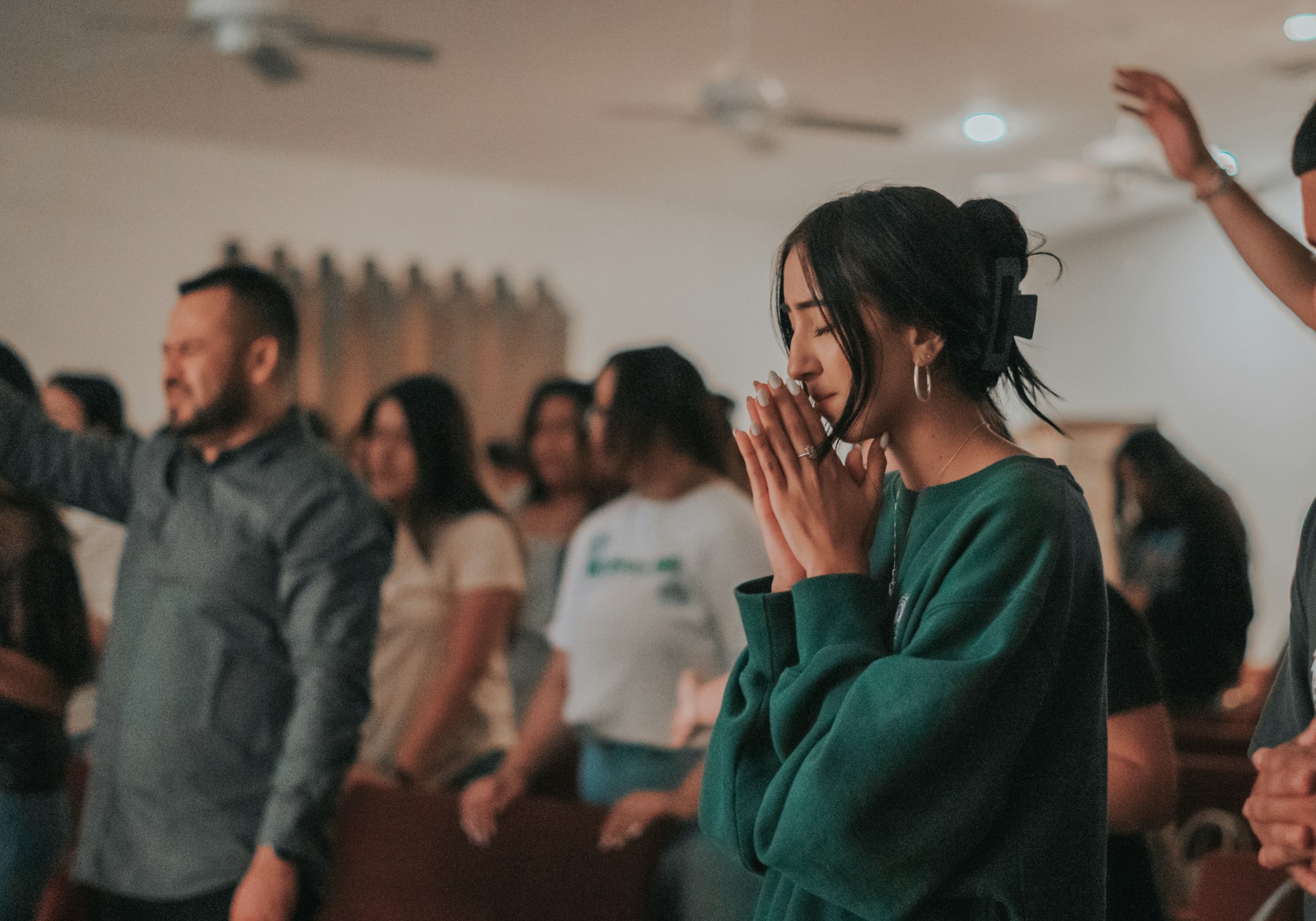 The Bible tells us that Jesus was not merely a great teacher or a historical figure. He was the Son of God who came to earth, fully human, fully divine. He knew rejection firsthand. The Bible records it plainly in John 1:11: “He came to that which was his own, but his own did not receive him.” He was misunderstood, betrayed, and sentenced to death by the very people he came to love.
He went to the cross willingly. He died for our sins, for everything in us that is selfish, broken, and turned away from God. And three days later he rose from the dead.
God did not wait for you to deserve his love. The Bible states it directly in Romans 5:8:
| “But God demonstrates his own love for us in this: while we were still sinners, Christ died for us.”
Romans 5:8 |
He did not love you after you cleaned up your life. He did not love you once you figured out the right things to believe. He loved you while you were still lost, still broken, still turned away from him. He loved you first.
Jesus knows everything about you. Every secret, every failure, every moment you are ashamed of, every time you have hurt someone or been hurt. He knows the parts of you that you hide from everyone else. He knows because he took your place. He paid the price for all of it before you ever thought to ask him.
And he loves you anyway.
Step 5 — Accepting a Love That Loved You Before You Deserved It
Jesus is not loving you based on what you might become. He is not loving you because you earned it. He loves you fully, right now, exactly as you are, with complete knowledge of who you are and everything you have done. In Jesus you are fully known and still fully loved.
God has been saying this for a long time. Through the prophet Jeremiah he spoke these words directly:
| “I have loved you with an everlasting love; I have drawn you with unfailing kindness.”
Jeremiah 31:3 |
Not a temporary love. Not a love that runs out when you fail or wanders when something better comes along. An everlasting love. A love that has been drawing you toward him long before you knew it.
Nothing can take this love away. Not your failures. Not your past. Not the people who have rejected you. Not the relationships that have fallen apart. Nothing.
This love is not something you earn or achieve. It is something you receive. Accepting it begins with honesty. Admitting that you have gone your own way. Turning toward the God who has been loving you all along. It is the same step Leah took when she stopped striving and simply said, “Now I will praise the Lord.” She did not have everything figured out. She just turned toward the One who had been there the whole time.
You can do the same.
If you’d like to understand this more fully, we encourage you to read our page on Steps to Peace with God, which walks through how that relationship begins.
Step 6 — Letting That Love Change Everything
When you receive God’s love it does not just fill the empty place inside you. It changes the way you see yourself and the way you love everyone around you.
Your value and your identity are no longer dependent on whether another person chooses you. You are already loved and accepted. You are loved completely by the God who made you. That security gives you the freedom to love others without needing something in return. You no longer need another person’s love to prove your worth because your worth is already settled.
This is what Leah discovered when she named her son Judah and turned her heart toward God. She did not suddenly have a perfect marriage. Jacob did not come home with flowers and an apology. Her outward circumstances had not changed at all. But she had found something that none of her circumstances could give or take away. She had found that she was loved by God, and that was enough to change everything.
The world will keep telling you that you are only as valuable as the people who want you. God says something different. You are loved not because of what you have done or what you look like or who has wanted you. You are loved because you are his.
Step 7 — Taking the First Step Toward True Love
Your search for true love does not end with finding the right person. It begins with accepting the love of the right God.
This step does not require you to have everything figured out. It does not require a perfect faith or a clean record. It requires only honesty, the same honest turn that Leah made when she stopped trying to earn love and simply received it.
Here is a simple prayer you can pray right now:
Dear Jesus,
I have been searching for love in all the wrong places. I am tired of trying to earn what I was never able to keep.
I have done wrong and I need your forgiveness. Please forgive me.
I believe you died for me and rose again. I want you to be my Lord and Savior. Help me make a new start.
Come into my life. Show me what it means to be truly known and truly loved.
In Jesus’ name, Amen.
If you prayed that sincerely, even with doubts, something real just happened. God heard that prayer. You are known. You are loved. Please let us know by using one of the buttons below.
What Comes Next
Receiving God’s love does not mean your life suddenly becomes easy. But it does mean you are no longer searching alone. The same God who saw Leah in her rejection and loved her anyway sees you right now. Not after you get it together. Not once you have worked through all of your questions. Right now, as you are.
As Paul wrote to those who had received Christ:
| “I am convinced that neither death nor life, neither angels nor demons, neither the present nor the future, nor any powers, neither height nor depth, nor anything else in all creation, will be able to separate us from the love of God that is in Christ Jesus our Lord.”
Romans 8:38-39 |
Nothing you have done, nothing you are facing, and nothing that lies ahead can separate you from this love. It is yours.
Learning to stop reaching and start receiving takes time. There is no pressure to rush it. The only step you need to take is the next one.
And if you are still not sure what you believe, that is okay too. You do not have to have everything sorted out to take a step toward God. He has met people carrying far more hurt than this. He will meet you here.
Frequently Asked Questions
What is unconditional love and does it really exist?
Unconditional love means being loved fully and without conditions, not because of what you do or what you look like or what you can offer, but simply because of who you are. Most of us have never experienced it from another person, which is part of why we keep searching. The Bible says this kind of love exists and that it comes from God. Romans 5:8 says: “While we were still sinners, Christ died for us.” He did not wait for us to deserve it.
Why is it so hard to find real love?
Because every person searching for love is also a person who struggles to give it. We are all naturally oriented toward our own needs, our own protection, our own interests. The Bible calls this sin and it means that even when two people genuinely love each other, the love is still limited and conditional in ways they cannot always control. The deepest love any human can offer still falls short of what our hearts are actually looking for.
What does the Bible say about love?
The Bible says a great deal about love but its most direct description is in 1 Corinthians 13:4-7: “Love is patient, love is kind. It does not envy, it does not boast, it is not proud. It does not dishonor others, it is not self-seeking, it is not easily angered, it keeps no record of wrongs. Love does not delight in evil but rejoices with the truth. It always protects, always trusts, always hopes, always perseveres. Love never fails.” The Bible says this kind of love comes from God, not from human relationships.
Can God really love me given everything I have done?
Yes. This is the central claim of the Christian message. Jesus went to the cross knowing exactly who we are and everything we have done. He was not surprised by your failures. He paid for them before you ever asked him to. His love is not conditional on your past, your record, or your worthiness. Romans 5:8 makes it plain: God demonstrated his love for us while we were still sinners. You are already fully known and still fully loved.
Does God love people who have been rejected?
Yes, and the Bible makes this personal. Leah was a woman who was never chosen by her husband, used by her father, and overlooked her entire life. The Bible records that God saw her rejection and responded with love and care. He did not wait for her situation to improve. He loved her in the middle of it. If you have been rejected, passed over, or made to feel like you are not enough, that is exactly the kind of person God moves toward. He has always had a particular tenderness toward those the world has overlooked.
What if I have been hurt so many times that I struggle to trust anyone, including God?
Most people who have been hurt a lot feel the same way. The people who hurt you were not God, even if some of them claimed to represent him. God does not ask you to trust him blindly. He invites you to take one small step toward him and see what happens. Leah did not figure everything out at once. She simply stopped striving and started receiving. You can do the same.
How do I know if I have really made a decision to follow Jesus?
There is no specific feeling you have to wait for. A decision to follow Jesus is simply a choice to turn your trust toward him. If you prayed that prayer sincerely, that counts. Let us know by using one of the buttons below and we would love to help you take the next step.
You Are Worth More Than You Know
Rejection tells you that you are too much trouble. That your story is too messy. That even here, reaching out will not lead anywhere. That nobody really wants to hear it.
None of that is true.
There are real people on the other side of these buttons who want to hear from you, who will not be burdened by your story, and who actually care about what happens to you next. Whether you just prayed for the first time, have a question that has been sitting with you, or simply need someone to pray for you today, we are here.
You do not have to have it together to reach out. You do not have to know what to say. You have already taken one step by being here. Take one more.