
When Fear Will Not Let Go
Author: The Journey Online TeamCan’t watch right now? Keep reading.
Fear Is More Common Than We Admit
Most of us would rather be seen as strong. Confident. Unshaken. But if we are honest, fear is something every person deals with at some point, and for many people it is something they deal with every day.
Maybe your fear has a name. A diagnosis that arrived without warning. A relationship that feels like it is falling apart. A financial situation that keeps you awake at night. A world that feels increasingly unstable and out of control.
Or maybe the fear is harder to name. A general unease that follows you through ordinary days. A sense that something bad is coming and there is nothing you can do to stop it. The feeling of being trapped, alone, and unable to rescue yourself from the weight of it.
Whatever fear looks like for you, this page is for you. What follows will not tell you to simply think positively or try harder. There is something real and solid here, and it is worth reading to the end.
What Fear Actually Does to a Person
Fear is not just an emotion. It works its way into every part of life, and it tends to grow the more we focus on what we cannot control.
You may recognize some of these in your own experience:
- A constant low-level anxiety that is present even in calm moments
- Lying awake at night running through worst-case scenarios
- Avoiding situations, people, or decisions because the fear of what might happen feels paralyzing
- A sense of being completely out of control of things that matter most to you
- Physical symptoms like a racing heart, shallow breathing, or a feeling of dread that arrives without warning
- The exhausting work of hiding how afraid you actually are from the people around you
- A growing sense of isolation, as if nobody else could possibly understand what you are carrying
The video above captures something true about fear: it isolates. It makes us feel that we are the only ones trapped in it, that we cannot rescue ourselves, and that there is no way out.
But there is a way through. And it begins somewhere surprising.
The Bible Takes Fear Seriously
The Bible does not minimize fear or dismiss it. It acknowledges fear as a real response to a world that is genuinely out of our control, and it speaks to it directly.
Throughout scripture, God says the same thing to people who come to him in fear:
“Do not be afraid; do not be discouraged, for the Lord your God will be with you wherever you go.”
Joshua 1:9
Those words were spoken to a man named Joshua who was about to face one of the most daunting challenges of his life. He had just been given an enormous and humanly overwhelming task. God did not tell him to be fearless because the situation was not dangerous. It was. God told him not to be afraid because God himself would be present in it.
That is a different kind of courage than the world offers. It is not the courage that comes from convincing yourself everything will be fine. It is the courage that comes from knowing you are not facing anything alone. That kind of courage does not come from inside you. It comes from a presence that is greater than whatever you are facing, and it holds even when the situation does not improve.
That same promise runs through the whole of scripture. Through the prophet Isaiah, speaking to people who were overwhelmed and out of options, God says this to those who turn to him:
“Do not fear, for I am with you; do not be dismayed, for I am your God. I will strengthen you and help you; I will uphold you with my righteous right hand.”
Isaiah 41:10
Four specific promises in one verse. I am with you. I am your God. I will strengthen you. I will uphold you. This is not vague reassurance. It is a direct declaration from the God who made everything that he sees you in your fear and is not standing at a distance from it.
These are not promises made to the world in general. They are the experience of those who have turned to God and placed their trust in him. And that door is open to you.
A Different Kind of Fear
Here is something that may surprise you. The Bible talks about a kind of fear that does not paralyze. It liberates.
When the Bible describes the fear of God, it is not talking about being terrified of God the way a person might be terrified of a threat. It is describing something much closer to awe. The kind of overwhelming sense of being in the presence of something so vast, so powerful, and so completely trustworthy that all other fears begin to shrink by comparison.
Think of it this way. When your fear is focused on all the things that could go wrong in a world you cannot control, those fears have nowhere to go but inward. They grow. They paralyze. They isolate. But when your attention shifts to a God who is greater than every one of those things, who holds the future in his hands, and who has demonstrated his love for you at enormous personal cost, something changes.
What this looks like in practice is that the moments that used to be consumed by fear become moments where you have someone to talk to about them. Instead of lying awake running through worst-case scenarios alone, you bring those scenarios to God. The fears do not always go away. But they stop defining you, because you are no longer facing them with no one greater to turn to.
The Bible describes this kind of reverential trust in God as the foundation that holds when everything else feels unstable. It is the antidote to earthly fear not because it removes danger but because it replaces the object of our attention. We move from focusing on what we cannot control to trusting the one who holds all things.
The God Who Entered Our Fear
The most remarkable thing about the God the Bible describes is that he did not watch human fear from a safe distance. He entered it.
Jesus, who was God himself come to earth in human form, experienced the full weight of human fear. Hunger. Rejection. Violence. The knowledge that death was coming. He faced all of it. And he faced it with a courage that came not from being immune to fear but from trusting completely in God’s control over every moment, including the worst ones. That same willingness to trust God through the worst brought him to the cross.
And there he died. Not as a martyr or a symbol but as a substitute. Every person, regardless of background, has sinned, going their own way apart from God in willful rebellion. The Bible calls this sin. And the consequence of that separation from God is spiritual death, a life cut off from the one who is the source of all peace, all courage, and all lasting hope. That separation is what gives fear its ultimate power. The deepest fear any person carries is not the fear of illness or failure or loss. It is the fear of being separated from the God who made them, of facing the unknown without him.
Jesus died on the cross to deal with that separation at its root. He took on himself the penalty that every person’s sin deserved. And three days later he rose from the dead. Because he rose, death itself has been conquered. The grave is not the final word for those who trust in him. The thing that drives the deepest human fear, the unknown that lies beyond this life, has been answered for those who trust in Jesus. Jesus himself said he is the only way to God. Salvation is not found in any other person, any other religion, or any amount of personal sincerity. It is found only in him.
For those who place their trust in Jesus, the apostle Paul wrote words that speak directly to every fear:
“If God is for us, who can be against us? Who shall separate us from the love of Christ? Shall trouble or hardship or persecution or famine or nakedness or danger or sword?”
Romans 8:31, 35
If you would like to understand this more fully, we warmly invite you to read through this short and honest explanation: Steps to Peace with God
A Prayer for Someone Who Is Afraid
If fear is what brought you to this page, this first prayer is simply for you. You do not need to have anything figured out. You can come to God with exactly what you are carrying right now. This first prayer is simply 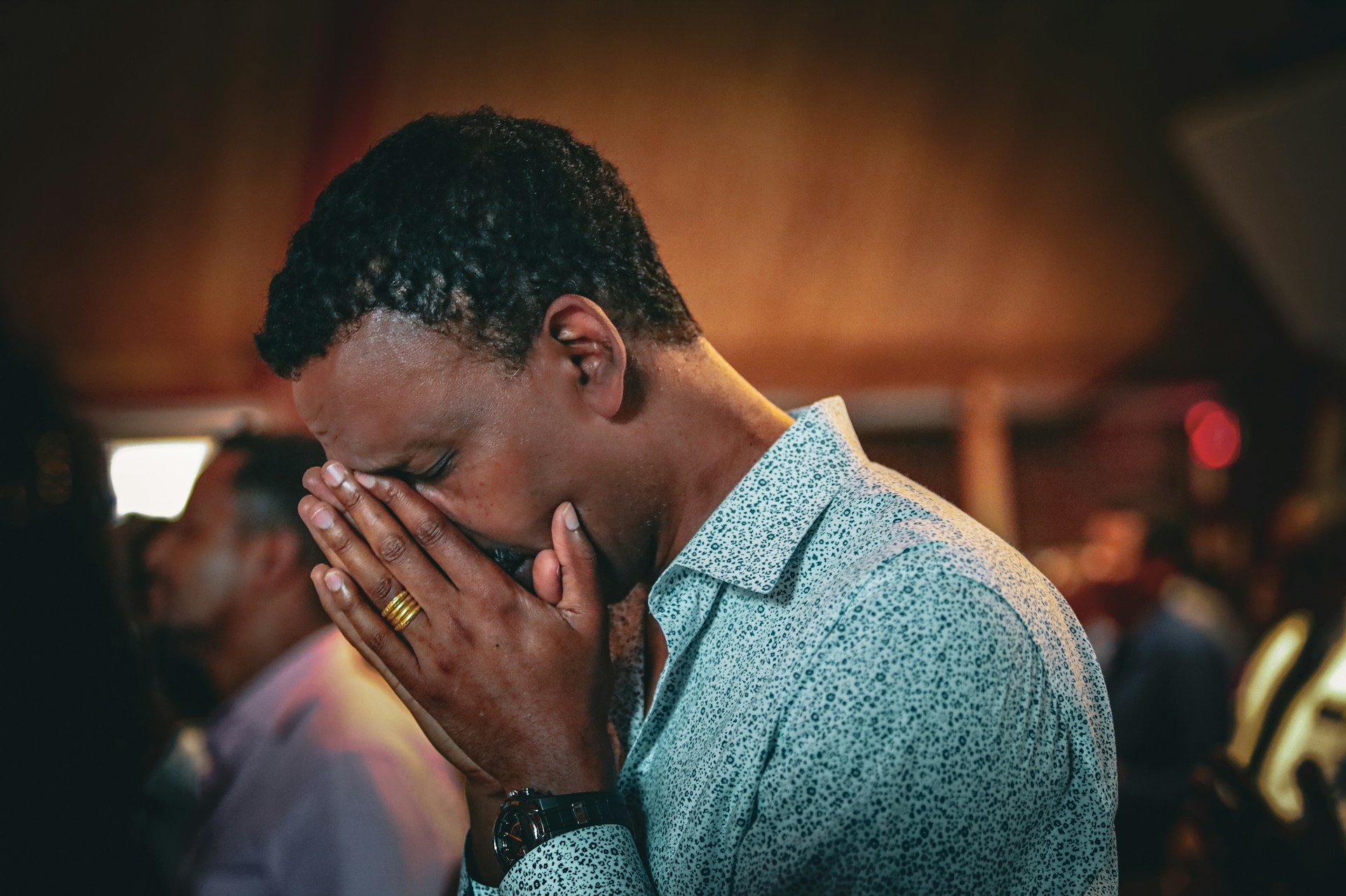 a step toward him. The second prayer further down the page is an invitation to begin a full and saving relationship with him through Jesus.
Here is a prayer you can make your own:
Heavenly Father, I am afraid. I feel out of control and I do not know how to make this fear stop. I believe that you see me right now and that you are not far from this moment. I choose to trust you with what I cannot control. Be with me in this. Give me the courage that only comes from knowing you are present. Amen.
God hears that prayer. He is not far from you right now, and his care for you does not depend on you having all the answers yet.
A Prayer for New Life and Freedom From Fear
If you are ready to go further, this second prayer is an invitation to place your trust in Jesus, not just for this fearful moment but for everything that comes after it.
Trusting in Jesus means recognizing that he is who he claimed to be, placing your confidence in what he accomplished rather than in your own efforts, and opening your life to him. When you pray to Jesus, you are speaking directly to God, who came to earth so that we could know him personally.
Here is a prayer you can make your own:
Jesus, I come to you with my fear and with everything else I am carrying. I know that I have sinned and fallen short of what you created me to be. I have gone my own way and I ask you to forgive me. I believe that you died for me and rose again and I am placing my trust in you today. Thank you for the gift of forgiveness and eternal life. I give you my fear, my future, and my life. Come into my life. I choose to follow you. Replace my fear with the kind of courage that only comes from knowing you are in control. I am yours. Amen.
If you just prayed that sincerely, something real happened. The fears have not all disappeared. But you are no longer facing them alone.
And for those who have just placed their trust in Jesus, this is now true:
Nothing can separate you from the love of Christ. Not fear. Not failure. Not the future. Not death itself.
For those who have just trusted in Jesus, he is close. Not watching from a distance. Present with you right now, in the middle of whatever is frightening you:
“The Lord is close to the brokenhearted and saves those who are crushed in spirit.”
Psalm 34:18
You Are Not Alone in What Comes Next
Coming to faith does not make fear vanish instantly. But it changes the foundation you are standing on. Instead of facing an uncertain future alone, those who trust in Jesus face it with a God who has promised never to leave them, who holds the future in his hands, and whose love nothing can interrupt.
That shift is real, and it works its way into the daily moments where fear used to be loudest. For those who belong to Jesus, the Bible describes what this looks like in practice:
“Do not be anxious about anything, but in every situation, by prayer and petition, with thanksgiving, present your requests to God. And the peace of God, which transcends all understanding, will guard your hearts and your minds in Christ Jesus.”
Philippians 4:6-7
That peace is not the absence of difficulty. It is a settled confidence that God is present, that he is in control, and that he has not forgotten you. It is not something you produce. It is something you receive from a God who is greater than what you are afraid of.
It is also worth saying gently: if fear and anxiety have been significantly affecting your daily life, your relationships, or your ability to function, talking to a counselor or therapist alongside your faith is a wise and courageous step. God works through trained and caring people, and seeking that support is not a failure of faith. It is taking seriously the life God gave you.
You are not alone. The God who made you, who entered your world, and who faced everything you face has not turned away from what you are going through.
Frequently Asked Questions
Does God really care about my specific fears, even the ones that seem small or irrational?
Yes. The Bible’s repeated command “do not be afraid” was not addressed to people facing dramatic crises. It was addressed to ordinary people in ordinary moments of human vulnerability. Jesus said that God knows the number of hairs on your head. That is not a statement about humanity in general. It is a statement about you specifically. He sees your specific fears and he cares about them.
What is the difference between fear as an emotion and the fear of God?
Fear as an emotion is a response to something that threatens you, something that feels bigger than you and outside your control. The fear of God is entirely different. It is not dread of a threat. It is awe in the presence of someone so vast, so powerful, and so completely good that every other source of fear begins to look smaller by comparison. One kind of fear closes in on you. The other opens up a view of reality where the things that were paralyzing you are no longer the most powerful force in your life.
What is the fear of God and why would that help someone who is already afraid?
The fear of God is not the same kind of fear that paralyzes. It is closer to awe, the overwhelming sense of being in the presence of someone so vast, so powerful, and so completely trustworthy that all other fears begin to lose their grip. When your attention is fixed on a God who holds everything, the things you fear do not disappear but they lose their power to define you. This is why the Bible says the fear of God drives out other fears. It replaces the object of your attention. In daily life this means that fear gradually loses its authority, because those who trust in Jesus have someone greater to bring it to.
I have been a fearful person my whole life. Can that actually change?
Yes, though it is rarely instant. The Bible does not promise that coming to faith eliminates fear permanently and immediately. What it promises is a presence, a companion, and a foundation that changes how fear functions in your life. Over time, as trust in God grows through experience, fear loses its authority. That is not a quick fix. It is a genuine transformation.
What if I prayed but did not feel anything?
Faith is a decision, not a feeling. If you prayed sincerely, God heard you. The feelings of peace and assurance often come gradually as the relationship with God develops. Do not let a quiet moment talk you out of what you just did. Click the button below and let someone walk with you from here.
I am not sure I believe in God. Can I still find help here?
Yes, and you are welcome here exactly as you are. Many people who found genuine peace and freedom from fear through Jesus started right where you are. Doubt is not a barrier to reaching out. Click the button below. No pressure and no judgment.
What happens when I click one of the buttons below?
A real person from our ministry team will reach out to you. We want to hear your story, pray for you, and offer whatever encouragement we can. We are not professional counselors or mental health specialists and we want to be honest about that. What we can offer is genuine care, prayer, and a connection to the God who sees you. If fear and anxiety are significantly affecting your daily life, we also encourage you to reach out to a qualified counselor or therapist alongside connecting with us.
Fear Does Not Have the Final Word
The woman in the video runs to her car and locks the door. Most of us know that feeling. The world is unpredictable. Some of what we fear is real. We cannot always make it stop.
But the God who made you is greater than any fear you face. He entered this unpredictable world himself. He faced everything we face. He died and he rose again. And he offers to every person who trusts in him a courage that does not depend on circumstances being safe, a peace that does not depend on everything being under control, and a presence that does not depend on the fear going away.
That is not a promise that life will be easy. It is something better. For those who trust in Jesus, it is the promise that you will never face it alone.
Please reach out. We are here, we are glad you found this page, and real people are waiting to hear from you.